Wearable / VR
Wearable Haptic VR Equipment
Wearable VR equipment with haptic feedback. Pneumatic actuators, haptic sensors and real-time interaction via wireless communication.
nRF52ESP32BLEWiFiHapticPCB DesignEmbedded C
// Embedded Software · FPGA · Hardware Design
Engineering experience across wearables, medical and industrial devices, automotive and telemetry/communication systems. End-to-end ownership — from hardware design to embedded software, from production planning to certification and testing.
// Top Skills
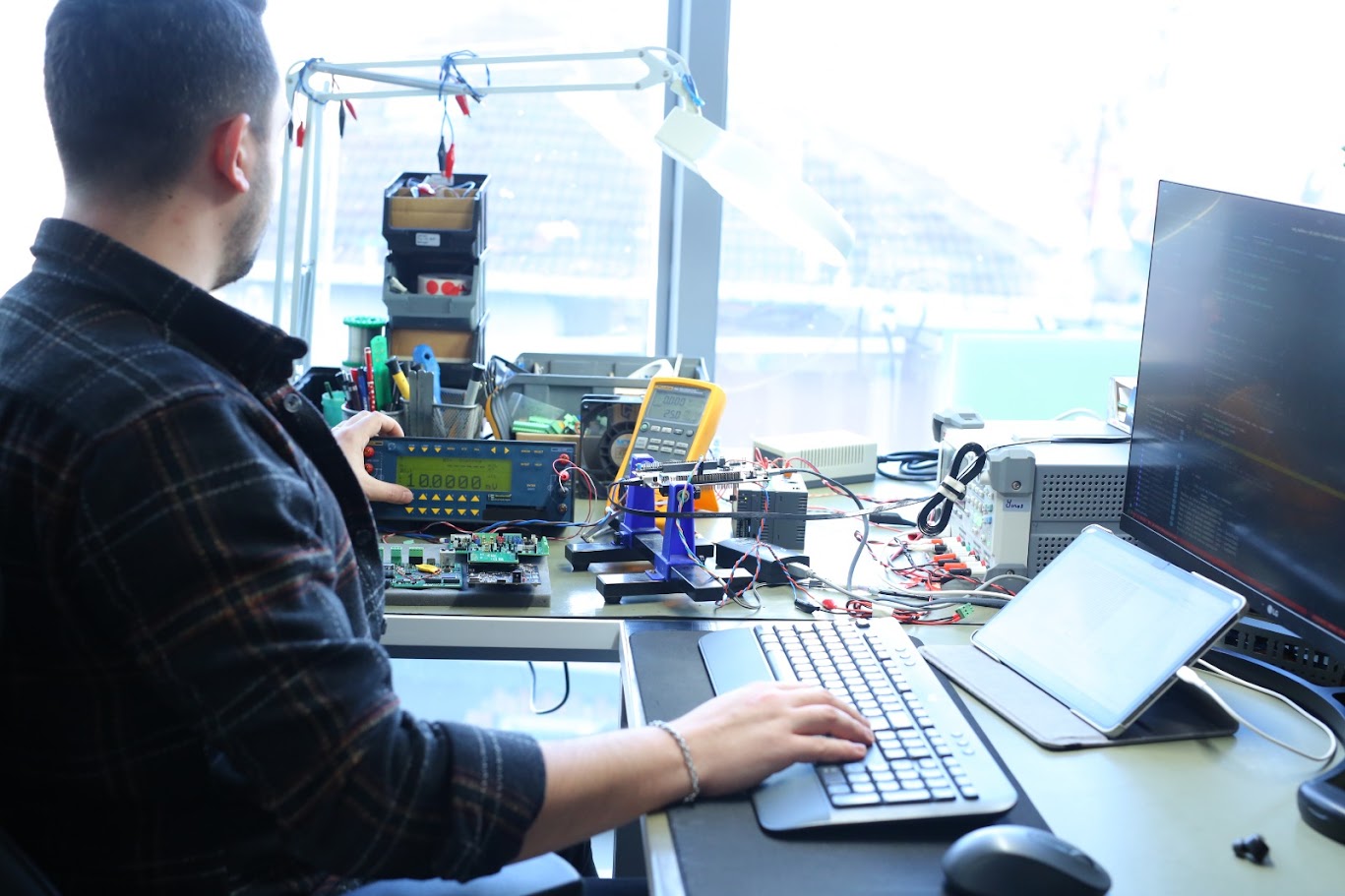
Bare-metal and RTOS firmware architecture on ARM Cortex-M/A and RISC-V based MCU/MPU platforms. Full software lifecycle from hardware abstraction layer to production testing.
FPGA/RTL based solutions for systems requiring high-speed and parallel data processing. Custom communication IPs, signal processing blocks and protocol conversion. Design → synthesis → simulation → verification.
Mixed-signal and high-speed I/O hardware designs. Schematic capture, circuit simulation, EMC/EMI compliant multilayer PCB layout and manufacturing file preparation.
Desktop, web and mobile applications integrated with embedded systems. Device interfaces, monitoring dashboards and configuration tools.
Hardware/software audits focused on code quality, memory management, power consumption, signal integrity and EMC compliance. System architecture design, technical mentorship and R&D process consulting.
Component supply chain management, board assembly process, bring-up, calibration procedures and production test infrastructure setup. Prototype to mass production transition.
Wearable VR equipment with haptic feedback. Pneumatic actuators, haptic sensors and real-time interaction via wireless communication.
Closed-loop FOC based driver design for 850W BLDC hub servo motor. Speed and position control loops, current sensing and protection circuits.
Two generations of industrial PLC design. Digital/analog I/O modules, Modbus RTU/TCP communication, expansion boards and full R&D cycle through field testing.
Household air purifier integrated with KNX building automation protocol. Air quality sensors, fan control algorithm and KNX gateway design.
Real-time location tracking and gas measurement system for hot air balloons. Wireless data transmission with GPS/GNSS, pressure, temperature and gas sensors.
50W RF power amplifier design in the 5480–5890 MHz band. Impedance matching, thermal management, protection circuits and PCB layout optimization.
 · Jun 15, 2026
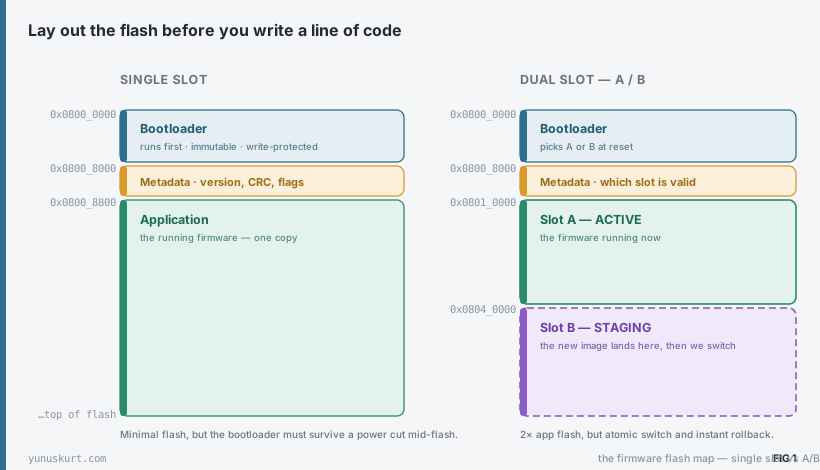
 How to replace firmware on a deployed device without bricking it and without letting anyone flash their own code — bootloader basics, the flash memory map, single-slot vs A/B dual-slot, the OTA update cycle with rollback, and secure boot with signed images and anti-rollback.
 · Jun 15, 2026
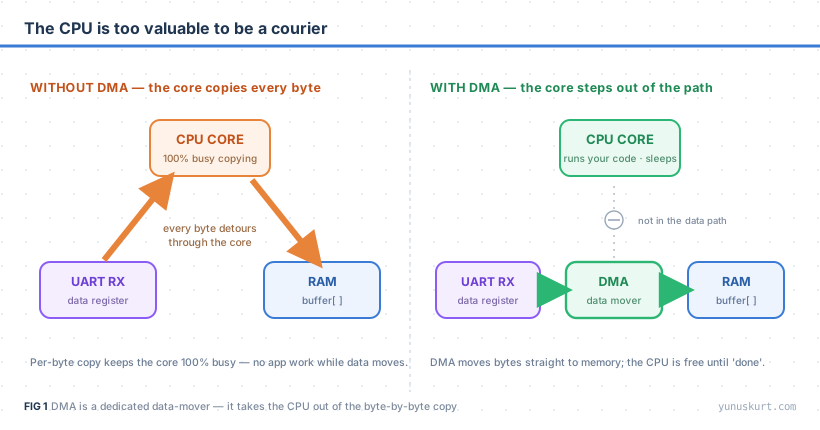
 Direct Memory Access explained for embedded engineers — how a DMA controller moves data between peripherals and memory without the CPU, why it buys throughput, determinism and power at once, the transfer modes (circular, ping-pong, mem-to-mem), and the cache and mapping gotchas that bite.
 · Jun 15, 2026
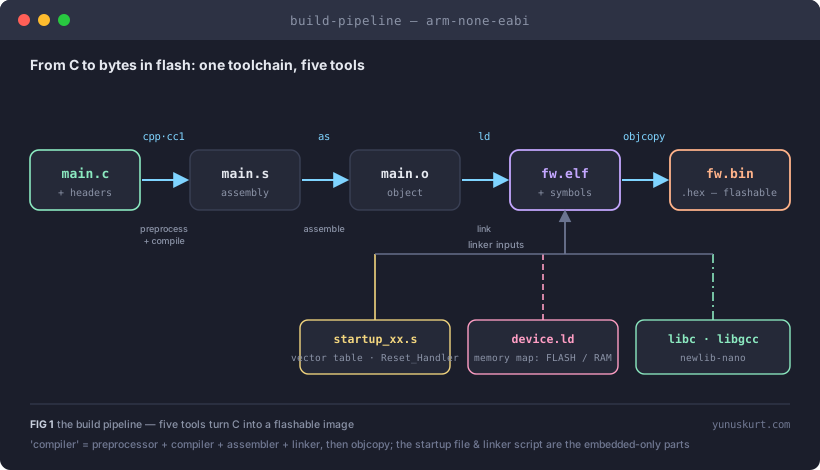
 A field guide to embedded toolchains — what actually turns your C into flashable bytes, how GCC, LLVM/Clang, IAR EWARM and Keil MDK differ on cost, code density and certification, and why an IDE like STM32CubeIDE is not the same thing as a compiler.